
Article · Data & AI
Data integration: map sources and dependencies before choosing technology
A practical guide to mapping sources, consumers, dependencies and observability before deciding how to integrate data.
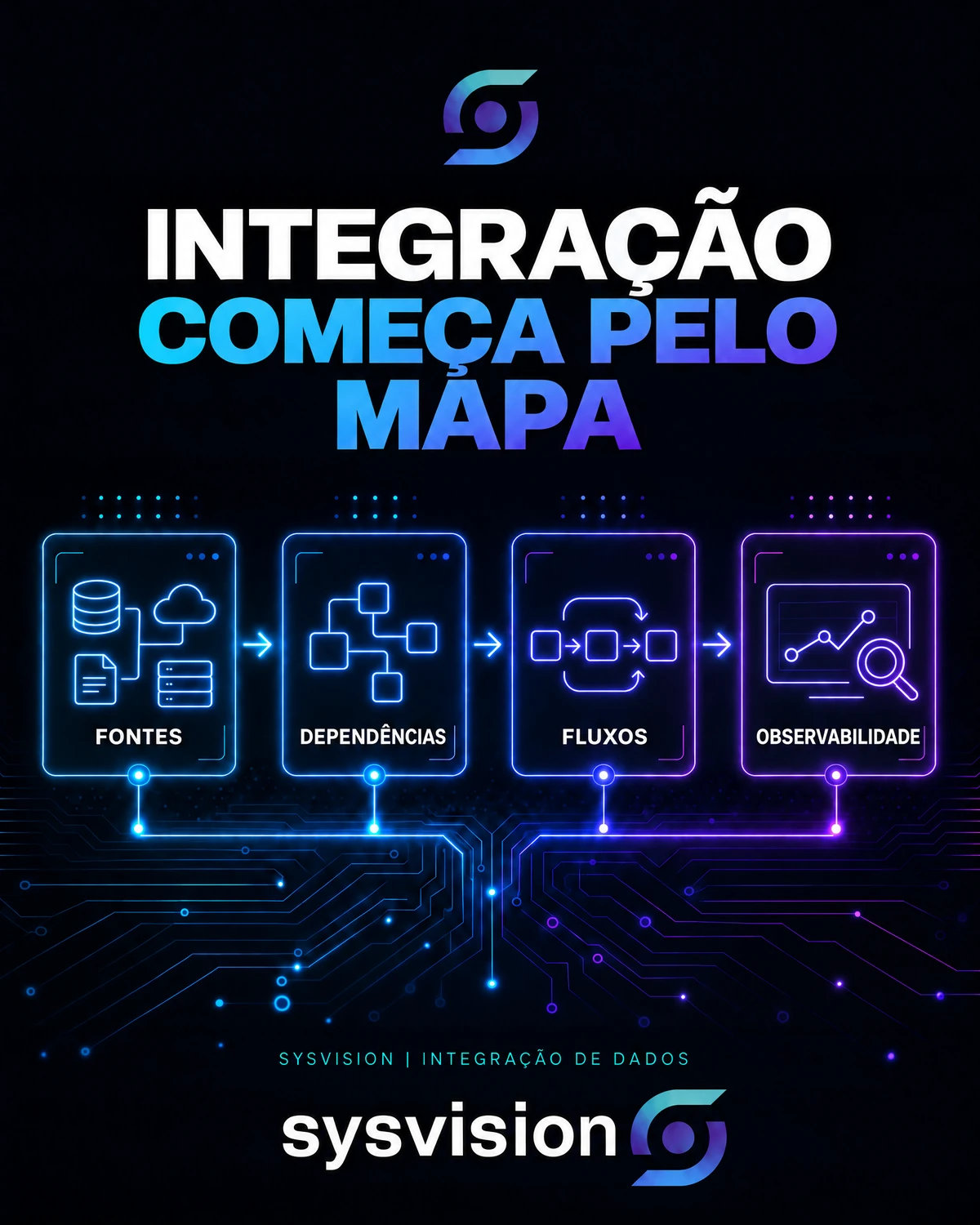
Data integration starts before choosing between APIs, ETL/ELT or change data capture. First, understand which sources take part in the flow, who consumes their data, which relationships the use depends on and how the team will notice changes or failures. This map helps evaluate mechanisms against the environment and use case instead of starting with an architecture chosen before discovery.
1. Start with the context that needs to connect
Before designing an integration, describe the workflow that depends on the data. Which decision, operation or information needs to move? Which teams are involved, and what changes if data is late, incomplete or stops arriving?
This scope keeps the discussion from starting with a technology chosen in advance. It also helps separate use-case requirements from implementation preferences.
Sources consulted: [1]
2. List sources and consumers
For each flow, record which systems or datasets are involved, who owns each source, who consumes the information and for what purpose. One source may serve different consumers with different needs and rules.
When information is missing, mark it as an open question rather than filling it in by assumption. Confirm purpose, definitions and access conditions with the people who understand each system and process.
- Source: the originating system, data or event.
- Owner: the person or team able to clarify the source definition and evolution.
- Consumer: the application, process, analysis or team using the data.
- Purpose: the decision or activity that depends on that use.
Sources consulted: [1]
3. Make dependencies visible
Map the relationships between sources, transformations and consumers. Identify which flows depend on others, where conversions or validations occur, and what needs coordination when a definition changes.
The goal is not to create a complex diagram for its own sake. A simple map, validated by people who operate the flow, can expose questions to answer before choosing how data should move.
- Which flow needs to happen before another?
- Where is data transformed or combined?
- Which definitions or contracts are shared across consumers?
- Who needs to be involved when a source or rule changes?
4. Include risks and observability in the design
Ask how the team will know when a flow no longer meets its intended use. Define which changes, delays, failures or discrepancies need to be noticed and who should receive that information.
The relevant signal depends on the process. There is no need to invent a generic metric: first describe the behavior that needs observing and agree with owners on how to identify and handle an exception.
- What condition indicates that an update did not arrive as expected?
- How will the team distinguish a delay, a failure and a legitimate source change?
- Where can the team inspect the flow’s status and history?
- Who decides the next step when the signal appears?
Sources consulted: [2]
5. Compare mechanisms after discovery
With the context mapped, evaluate options such as APIs, ETL/ELT, change data capture (CDC) and orchestration against the flow’s needs. SYSVISION’s Solutions page describes these capabilities as integration options to be designed around an environment’s sources and dependencies.
Compare what each option needs to solve in the specific case: consumption pattern, update frequency, transformations, exception handling and operations. The answers guide a decision; there is no single right choice for every environment.
Sources consulted: [2]
6. Prioritize a sequence for change
After recording sources, consumers, dependencies, risks and use cases, compare what needs to happen first. A useful sequence makes assumptions, teams involved and outstanding decisions explicit.
In SYSVISION’s published AI Data Foundation approach, discovery and prioritization come before designing contracts, pipelines, APIs, CDC, layers and data products. Scope and sequence depend on the environment, priorities and internal capabilities.
Sources consulted: [1]
Checklist: is the map ready to guide the discussion?
Use these questions to identify gaps before discussing tools or implementation.
- Are the sources and their owners identified?
- Are the consumers and their intended uses clear?
- Have dependencies between flows and transformations been recorded?
- Have risks, exceptions and signals to observe been discussed?
- Will technical options be compared against this context?
- Are priorities and open questions visible?
Question for your context
Which data flow still depends on manual integration or informal team knowledge?
Sources consulted
- [1] SYSVISION — AI Data Foundation
Related content: Mapping sources, consumers, dependencies, risks and use cases before defining an evolution sequence and designing integrations for the environment.
- [2] SYSVISION — Data and integration solutions
Related content: Published capabilities for APIs, ETL/ELT, CDC, orchestration, monitoring and error handling, described in relation to an environment’s needs.
An idea that can shape the next decision.
A practical guide to mapping sources, consumers, dependencies and observability before deciding how to integrate data.
Map sources, consumers and purposes before choosing mechanisms.
Record dependencies, risks and open questions.
Compare APIs, ETL/ELT and CDC against the environment and use case.
Article · Data & AI
Bring the topic into your context.
An initial conversation helps connect the concept to your environment’s priorities, dependencies and capabilities.